CASA0029 Interactive Visualisation

Urban Flyways in London

Understanding how migratory birds move through a changing city.

Every year, seasonal bird movements reveal hidden ecological rhythms across London's urban landscape.

Overview · Why London

Why London?

London combines dense built form, fragmented green infrastructure and major migratory pathways. This makes it a useful urban laboratory for asking where bird activity concentrates, when it peaks, and which environments support it.

Water corridors support feeding and movement, especially near the Thames, reservoirs and wetland edges.

Overview · Species Selection

Which migratory birds appear most frequently?

The selected three species represent different temporal patterns, providing a basis for further analysis.

Flight Patterns · Seasonal Rhythm

Seasonal flight patterns across the year

Migratory birds do not appear randomly. Their records follow distinct seasonal rhythms, reflecting migration timing and ecological adaptation.

Flight Patterns · Migration Peaks

When does the city become most active?

Use the seasonal cards to reveal how arrival, peak activity and transition periods create different observation windows.

Spring emergence
Early records begin to reappear around riverside and suburban areas.

Flight Patterns · Spatial Hotspots

Where do birds concentrate?

Use species and season controls to explore how hotspots shift across London at MSOA level.

Bird
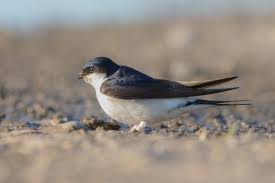
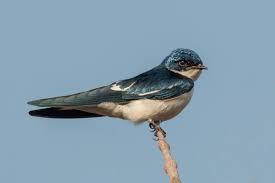
Swallow

A long-distance migrant often associated with open landscapes and riversides.

Top 5 hotspot boroughs

Spring emergence

Early hotspots emerge in suburban and riverside areas.

Bird count
LowHigh

Interactive Module 2 | Urban Conditions

London bird hotspots and their shared urban habitats

Do high-record bird observation areas tend to sit near parks, water corridors, or dense urban settings? Use the map first: filter hotspots, follow the short story route, then compare two MSOAs.

Data period2021-2025 cumulative records
Bird records--
Hotspot MSOAs--
Shared hotspot signature--
Top borough--

Bird Hotspot Habitat Map

Recorded activity hotspots

Filter, compare, and inspect cumulative 2021-2025 bird records by MSOA.

Hover an MSOAUrban fingerprint appears here
Loading MSOA polygons...

Bird activity

Urban Habitat · Environmental Profiles

Hotspots have different urban fingerprints.

Green cover, water proximity and building density help explain why some areas act as repeated bird observation clusters while others remain weaker.

Green-rich hotspots indicate where high observation counts align with stronger ecological support.

Urban Habitat · Compare Areas

Compare two urban habitat profiles

Select two habitat profile types to compare records, green cover, water cover and built context.

Attention Zones · BHP Index

How do we translate bird records into planning attention?

The Bird Habitat Pressure Index (BHP) is a composite interpretation layer. It balances supportive ecological conditions against urban pressure, helping identify where bird activity is already well supported and where restoration or mitigation should be prioritised.

Higher scores indicate stronger habitat potential; lower scores indicate areas where disturbance and environmental stress may reduce ecological suitability.

Composite index
BHP = (w1Hi + w2Ci) −(w3Di + w4Li)

The formula keeps the logic transparent: habitat quality and connectivity increase BHP, while human disturbance and light pollution reduce it.

HiHabitat Quality

Represents local habitat support, including greener or more ecologically favourable conditions.

CiConnectivity

Captures whether the area can function as part of a wider ecological movement network.

DiHuman Disturbance

Approximates anthropogenic load such as dense built fabric and direct urban disturbance.

LiLight Pollution

Represents artificial night-time light exposure that can disturb orientation, feeding and nesting behaviour.

Hi increases BHP.Higher habitat quality means stronger local support for migratory birds.
Urban Pressure Arealow BHP
Attention Zonemoderate-low BHP
Potential Corridormoderate-high BHP
Stable Habitat Corehigh BHP

Attention Zones · Interactive Map

Where should ecological attention be prioritised?

This map converts the BHP score into planning categories. Click an MSOA to inspect its BHP score, bird records, ecological determinants and suggested planning action.

Loading BHP areas...
BHP planning category
Stable Habitat Core
Potential Corridor
Attention Zone
Urban Pressure Area
Observed bird hotspot centroid

Attention Zones · 3D Morphology

What does a selected MSOA feel like in urban form?

Click an MSOA polygon on the left. The model rebuilds the selected area as an urban-form profile: warm towers show disturbance and night-light pressure, while blue-green terraces show habitat quality and ecological connectivity.

Selected areaClick a polygon
BHP classWaiting
Bird records--
Click any MSOA to update the 3D block

Attention Zones · Planning Logic

From observation evidence to spatial planning action

The BHP classes are not just map colours. They translate bird records and urban conditions into different levels of intervention, from conservation to retrofit.

01 · Stable Habitat Core

Protect existing ecological anchors

Keep mature tree cover, reduce lighting spill, protect nesting opportunities and avoid fragmentation around the strongest BHP areas.

Evidence layer

Bird records + habitat quality + connectivity + pressure indicators

Planning scale

MSOA screening first, then site-level design and policy review

Policy link

Supports urban greening, biodiversity net gain, blue-green infrastructure and light-sensitive design

Future · Planning the Flyway

Turning the flyway into an urban design agenda

The next step is to use the visualisation as a decision-support layer: where to protect, where to connect, and where to retrofit bird-sensitive urban space.

Blue-green network

Use rivers, reservoirs, parks and wooded edges as a connected movement system. BHP hotspots can identify where corridor continuity should be strengthened.

Future · Limitations

What this visualisation cannot claim

Observation records are influenced by survey effort, accessibility and reporting bias. The maps should be read as exploratory evidence for spatial patterns rather than complete measures of bird abundance.

Records do not equal true population size.
Urban condition indicators simplify complex habitat quality.
Further validation could combine survey effort, land cover and field observations.

Future · Team

Our Creative Team:

Project members responsible for spatial analysis, interaction design and website integration.

Yutong Xu

Yutong Xu

Co-Producer

xyutong9407@gmail.com

@Hhyoloo

Xiaoyi Wang

Xiaoyi Wang

Co-Producer

wxysicily@gmail.com

@Sicily0310

Xuchen Xi

Xuchen Xi

Co-Producer

ceciliaucfnxix@gmail.com

@XiXuchen